 English
 Español
 عربي
 Pусский
 Oct 30, 2026
Visit:3
Oct 30, 2026
Visit:3
A web break is the most expensive stop on a flexo press. It costs more than the material on the floor—it costs re-web time, lost production, and often a cascade of downstream quality issues on restart. The difficulty is that a break is rarely caused by one thing. It is almost always the intersection of a mechanical weakness, a material flaw, and an operating condition that pushes the web past its breaking point at a specific location.
That is why “check your tension” is not a useful troubleshooting answer on its own. A better diagnostic approach is to ask where the break happens. The unwind, the drum area, the rewind, and the splice each fail for different reasons and demand different corrections. The following guide organizes troubleshooting around those four failure zones, followed by a daily inspection routine and emergency handling protocol.
Unwind breaks usually announce themselves at roll changes, at acceleration, or when a roll is nearly exhausted. The web is under the most direct mechanical control here—the unwind brake or motor is resisting roll rotation to create tension—so any disturbance in that balance propagates straight into the sheet.
Uneven roll hardness and tension spikes. A roll wound with soft and hard bands will demand different torque as it unwinds. The tension controller tries to compensate, but the correction itself creates a spike. One converter reported that after retraining slitter operators and switching to an 8% taper from core to surface, web breaks dropped by 70%. If unwind breaks cluster at specific points in a roll’s diameter, suspect the incoming roll profile before touching the press.
Core offset and roll wander. If the paper core is not concentric or the roll is not seated squarely in the chuck, the web will track laterally as the roll turns. Lateral movement changes the wrap angle over the first idler, which changes tension on one edge. A roll that runs out of centre is a known cause of unwind breaks and should be rejected at loading, not “run out” in hopes it settles.
Excessive unwind tension on a diminishing radius. Tension is torque divided by roll radius. As the unwind roll shrinks, torque must decrease to hold the same tension. If the taper or closed-loop response is too aggressive, the web is over-tensioned near the core, where the material has already been stressed by winding. The break often occurs after the roll looks almost finished—which is precisely when operators are tempted to speed up to clear the roll.
Correction: Audit incoming roll hardness and edge condition at the unwind. Verify that the tension taper matches the substrate and that the load-cell or dancer response is not overshooting at roll-diameter changeover. If breaks consistently occur at the same unwind position, mark the roll and trace it back to the slitter or supplier.
Breaks inside the central impression drum area are the most mechanically revealing. The web is fully supported and under controlled tension here, so a break in this zone usually points to a geometric or tribological fault rather than a tension setpoint error.
Roller misalignment and parallelism. If breaks occur repeatedly in the same drum-area position, parallel misalignment is a primary suspect. Misalignment causes one edge of the web to go slack while the other edge carries double the average strain; the slack edge can flutter or wrinkle into a fold, and the taut edge becomes the initiation site for a tear. A practical target for converting equipment is 2 mils per foot of parallelism; beyond that, lateral shift and edge flutter become measurable even if the misalignment is invisible to the eye. The diagnostic clue is positional repetition: a break that always happens at the same station or the same wrap is telling you the geometry is wrong there, not that the paper is weak.
Debris and dried ink on rollers or the drum. A dried ink flake, a sliver of dried adhesive, or a fiber wrapped around an idler creates a local high spot. The web is lifted and locally over-stressed as it passes over that spot, and a pinhole or edge split can open within a few revolutions. The same mechanism applies to debris on the CI drum surface itself. Roller and drum cleanliness is not cosmetic—it is a break-prevention measure.
Static pinning and wrap disturbance. Static charge on a fast-moving paper web can pin the sheet to a roller or cause it to cling and shift rather than release cleanly. The problem is especially acute at the point where the web exits the CI drum, where static ignitions and charge-related tracking disturbances are most commonly reported. A web that is “sticking” rather than wrapping smoothly is a candidate for ionization, not more tension.
Correction: Laser-align or tram the drum-area rollers against the 2 mils/ft benchmark. Establish a drum and idler cleaning cadence that includes the CI surface, not just the print stations. If the break is preceded by visible tracking wander or a “snap” sound, install or relocate ionizing bars immediately before and after the suspected charge-generation point.
Rewind breaks are often misdiagnosed as “bad paper” because the web has already survived the print stations. In reality, the rewind is the zone where tension profile and nip mechanics most directly determine whether the web exits the press intact.
Tension fluctuation and taper error. A constant rewind tension is almost always wrong. As the rewind roll builds, each layer compresses the layers beneath it; without a taper—typically a gradual reduction of 5–10% from core to outside diameter—the inner layers can be stretched or crushed, and the outer wraps carry excessive strain. Breaks at the rewind frequently occur not at the point of winding, but when a high-tension outer wrap is pulled against a lower-tension inner layer during a speed change or at the moment of roll removal.
Rewind shaft eccentricity and surface slip. A rewind shaft that is bent, worn, or not seated concentrically introduces a once-per-revolution tension oscillation. The web sees a cyclic load that can fatigue a marginal edge or splice. Surface slip—where the web does not grip the rewind drum or nip consistently—produces the same effect: the controller commands a tension the web is not actually experiencing, and the mismatch shows up as a break at the next tension transition.
Correction: Verify the rewind taper against the substrate supplier’s recommendation and check shaft runout with a dial indicator. If breaks occur at a frequency that matches roll RPM, the problem is eccentricity, not tension setting. Adjust nip pressure and confirm that the rewind tension reading responds smoothly during acceleration and deceleration, not in steps.
Splices are the single most common location for a web break on a running flexo press, and the reason is simple: a splice is a deliberate discontinuity in a continuous material. Most splice failures are not random—they are the result of a tape that is wrong for the substrate, a splice that is not flat, or a preparation procedure that varies from operator to operator.
Tape selection is substrate-specific. A tape that performs on paper can fail on a low-surface-energy film, and a tissue-backed tape can shed fibers onto rollers and drums, creating secondary defects that later become break sites. Splittable flying splice tapes are engineered to separate cleanly without leaving exposed adhesive or “butterfly tabs”; fiber-free constructions reduce debris on the CI drum and blankets. For high-slip or recycled films, a standard splice tape may simply not have enough tack to hold through the acceleration ramp.
Flatness and bubble elimination are non-negotiable. A splice with a trapped air bubble or a lifted edge creates a localized thickness bump. That bump passes through every nip and roller downstream, and the lifted edge is a stress riser. The splice must be rubbed down firmly across the full width, starting inboard from the edges so that the tape does not overhang and catch. An overhanging tape edge is effectively a deliberate edge crack—the most damaging defect geometry a web can carry.
Splice strength must be tested, not assumed. A splice SOP that includes a strength check—even a simple peel or pull test on a sample made with the same tape and substrate—catches tape incompatibility before it reaches the press. “Most breaks start at the join” is not a cliché; it is the operational reason splice preparation should be standardized and audited.
Correction: Match the splice tape to the substrate family and press speed, not to what is closest on the shelf. Require a flat, bubble-free laydown with no edge overhang. If splice breaks persist, pull a production splice and inspect the failure mode: adhesive failure points to tape selection; coherent failure of the tape backing points to a strength mismatch; edge lift points to application technique.
A break-prevention routine does not need to be long, but it does need to touch the four failure zones every day.
Daily, before first run
Idler and guide roller rotation: Turn each roller by hand. A roller that drags or feels notchy will create a tension disturbance and a polished wear track on the web. A dragging idler is a classic “slow” cause of a break that later gets blamed on the paper.
Tension sensor zero with web unloaded: With no web tension on the transducer roll, the tension meter should read zero. If it does not, the controller is starting from a false baseline and every downstream tension decision is biased. Zero calibration should be verified before the first splice, not after the first break.
Edge inspection at every roll change: Run a gloved hand along both edges and look for nicks, crushed edges, or coating buildup. An edge defect is not a cosmetic issue: a sharp edge crack can reduce web strength far more than a center defect of the same size, and defects near the edge are more serious than equal geometry in the center. Small nicks can be dressed to a radius with a blade to relieve stress concentration, but a deeply cracked edge should be flagged and run with reduced tension or rejected.
Weekly, or at every shutdown
Drum-area parallelism spot-check: If breaks have occurred in the same drum position during the week, put a straightedge or laser across the suspected roller pair. A repeat-position break is a geometry alarm.
Splice tape inventory audit: Confirm that the tape on the floor matches the substrate running and that opened rolls are not contaminated with dust or adhesive transfer.
Static-control function check: If ionizing bars are installed, verify that they are powered and positioned at the charge-generation points—particularly before the first print station and at the CI drum exit.
When a break occurs, the first priority is stop the press cleanly and protect the remaining web from wrapping driven rollers. A web break detector or the operator should trigger an immediate controlled stop; continuing to run even briefly after a break can wrap substrate around a hot drum or a nip, turning a re-web into a mechanical repair.
Once stopped, do not restart until the break location has been identified and the immediate cause ruled out. A break at a splice that is simply re-spliced and run again will often fail again within the same shift if the tape or preparation was the root cause. Clean the broken web out of the drum area and inspect rollers for wrap and debris before threading. Only after the path is clear and the suspected cause—tension spike, splice, edge damage, debris, or alignment—has been addressed should the press be brought back up, and then through a controlled acceleration ramp rather than an immediate jump to run speed.
If the same failure zone keeps recurring after these checks, contact our application engineers for a web-break troubleshooting consultation.”>
Yes, but usually indirectly. Static itself does not typically tear a sheet in one event; it causes the web to cling, track poorly, or attract dust and debris that creates a local defect. The most dangerous static location is often where the web exits the CI drum, where charge can disturb web release and ignition risk is highest. Ionizing bars placed before and after the charge-generation point are the standard countermeasure; if a break is preceded by tracking wander or a “snapping” release from a roller, static should be treated as a contributing cause.
Higher speed increases the severity of every existing weakness. Acceleration ramps are a common cluster point for breaks because tension zones must track speed changes in a coordinated way; a lagging unwind or rewind response creates a transient spike that a slow-speed run would never expose. Speed does not create a defect, but it removes the margin that was hiding it. If breaks cluster at acceleration rather than at steady state, tune the ramp and tension-loop response before blaming the substrate.
Thin film fails differently from paper: it has lower tolerance for tension variation and is more sensitive to edge damage and nip slip. Keep tension variation within a narrow band—one practical target is within roughly ±0.5 N per linear cm of width—and use a tapered rewind profile to avoid crushing the build. Condition the film to the pressroom before running; cold, dry film snaps at tensions that paper tolerates easily. And inspect edges at every roll change: a tiny nick in thin film becomes a running tear faster than in any paper grade.
Web breaks are not a single problem with a single fix. They are a location-specific failure mode, and the fastest path to fewer breaks is to stop treating every break the same way. An unwind break points to roll quality and tension taper. A drum-area break points to alignment, debris, or static. A rewind break points to taper and shaft mechanics. A splice break points to tape selection and preparation discipline. The press tells you where the problem lives; the troubleshooting work is to listen to the location before reaching for the tension dial.

Oct 30, 2026

Oct 22, 2026
FLEXO PRINTING MACHINE
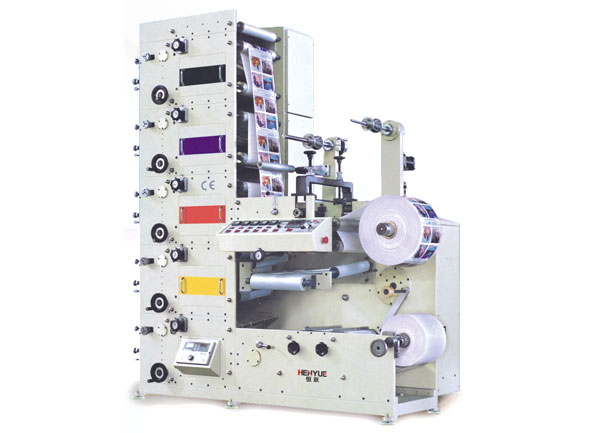
FLEXO PRINTING MACHINE
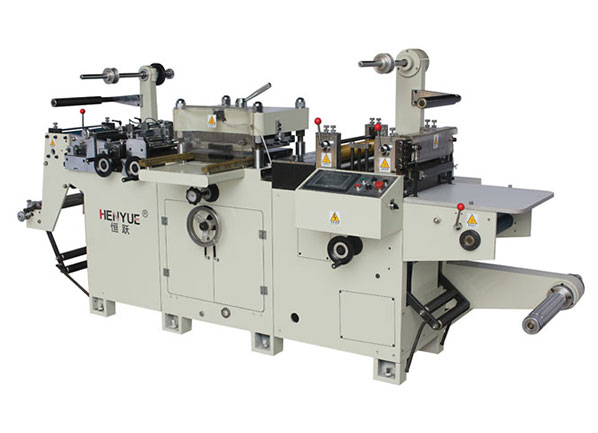
FLEXO PRINTING MACHINE
GET A QUOTE